What It’s Really Like To Live In Buckhead
April 2, 2026
April 2, 2026
If you have ever wondered whether Buckhead feels more like a city neighborhood or a collection of quiet residential pockets, the honest answer is both. That mix is exactly what draws so many buyers to the area, especially if you want access to dining, shopping, and transit without giving up tree-lined streets and a more private home setting. In this guide, you will get a practical look at what daily life in Buckhead is really like, from housing and walkability to errands, commuting, and weekend routines. Let’s dive in.
Buckhead is not a single, compact neighborhood. According to Livable Buckhead, it covers about 20 square miles and includes 43 neighborhoods, roughly 87,000 residents, 18,678 individual homes, 33,763 multifamily units, 23 million square feet of office space, more than 1,500 retail outlets, and over 300 restaurants.
That scale shapes the experience of living here. You may spend part of your day in a dense, polished commercial area and then come home to a quieter residential street that feels far removed from the business core.
One of the biggest things to understand about Buckhead is that it contains several lifestyles under one name. As the Atlanta History Center notes, the area grew from rural estates into a prominent residential district along Peachtree Road, and today it includes a broad mix of commercial corridors and recognized single-family neighborhoods.
That means your day-to-day experience can vary a lot depending on where you live. Near the commercial core, you are closer to offices, shops, restaurants, and high-rise buildings. In more residential pockets, the setting can feel more settled, shaded, and neighborhood-oriented.
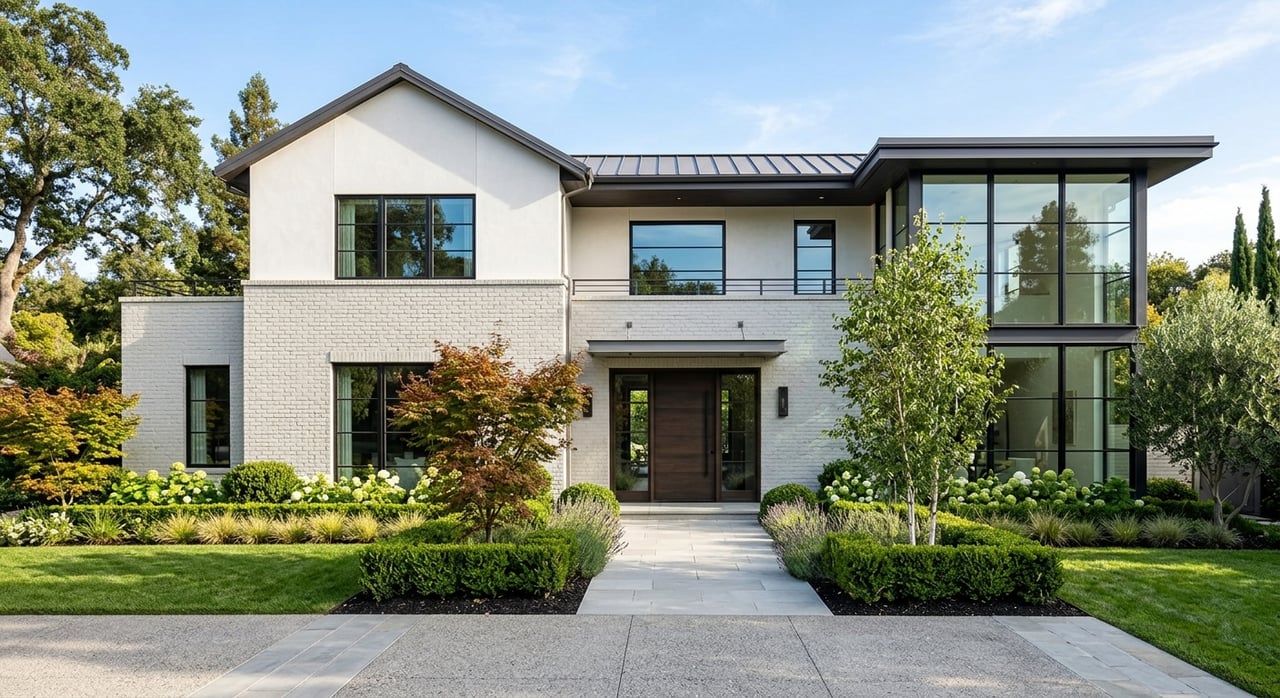
Buckhead offers one of the broader housing mixes in Atlanta. Livable Buckhead’s community overview highlights historic areas with grand homes, more understated residential neighborhoods, and modern glass towers in the commercial core.
For you as a buyer, that often means you can choose between traditional single-family homes, townhomes, luxury condos, and high-rise residences with modern amenities. If you are comparing lifestyle options, Buckhead gives you flexibility that many areas simply do not.
Some people think of Buckhead mainly in terms of traffic and busy roads, but the streetscape in key parts of the district has changed noticeably. The Peachtree Road Complete Street project added sidewalk and crosswalk improvements, bike lanes, landscaping, lighting, medians, granite curbs, and utility burial, with the final phase completed in 2023.
That investment matters because it improves the feel of everyday life. In the most active areas, Buckhead feels more finished, more connected, and more comfortable for short walks than its older reputation might suggest.
Buckhead is known for its retail and dining options, and that reputation is grounded in a few major hubs. Lenox Square describes itself as the Southeast’s premier shopping destination, with nearly 250 specialty stores and dining options, while Phipps Plaza is closely tied to luxury shopping and elevated dining in the same broader area.
If you prefer something that feels more walkable and neighborhood-scaled, Buckhead Village District offers a different rhythm. Its official description emphasizes shopping, dining, wellness classes, social gathering spaces, cobblestone streets, greenery, and a more village-like environment.
In practical terms, many errands and social plans in Buckhead happen in high-amenity nodes rather than along one main street. That gives you variety, but it also means where you live within Buckhead can affect how often you walk versus drive.
Buckhead is more than office towers and retail destinations. The PATH400 project is a planned 5.2-mile greenway that connects neighborhoods, offices, and retail areas, and Garden 684 adds more greenspace in North Buckhead near a PATH400 connection.
These projects help explain why parts of Buckhead can feel more livable and connected than outsiders expect. If you value the ability to get outside for a walk, a bike ride, or a quick break from the workday, those spaces can play a meaningful role in your routine.
Buckhead has stronger transit access than many people assume. Buckhead Station is on MARTA’s Red Line, and Lenox Station is on the Gold Line, which makes rail a real part of daily life for residents near the core.
Livable Buckhead also operates The Buc, an on-demand microtransit service that runs on weekdays during commute and lunch hours. Rides are free to and from the Buckhead and Lenox MARTA stations, with a $3 fare elsewhere in the service zone.
Still, Buckhead is large and geographically varied. In the denser commercial areas, you may rely less on your car for shorter trips. In more spread-out residential sections, driving often remains part of the normal routine.
The most accurate answer is that walkability depends on the specific part of Buckhead you choose. Around Buckhead Village, the MARTA stations, and the PATH400 corridor, the environment is more walkable and better connected.
Outside those pockets, residential areas can feel more car-oriented. That does not make them less appealing, but it does change how your daily routine may work, especially for errands, dining, and commuting.
Because Buckhead is a major office and retail center, it sees significant daytime activity. Livable Buckhead estimates a daytime population near 140,000, which helps explain why some corridors feel energetic and active during working hours.
At the same time, the residential side of Buckhead often feels calmer once you move away from the busiest nodes. That contrast is part of what many residents appreciate. You can be close to a lot of activity without feeling like you live in the middle of it all.
Buckhead works best for people who want both. The commercial spine is dense, amenity-rich, and active, while the surrounding neighborhoods are more residential and tree-lined, as described by Livable Buckhead.
That balance is one of Buckhead’s defining strengths. If you want a neighborhood that gives you options, from a high-rise lifestyle to a more traditional residential setting, Buckhead offers that range in a way few Atlanta areas do.
Buckhead often appeals to buyers who want convenience, polished surroundings, and a broad range of housing choices. It can be a fit if you want easy access to dining and shopping, a mix of residential character and urban amenities, and a location that connects well to other parts of Atlanta.
It can also work well if you value having options. Some buyers want a condo near the action. Others want a more private home setting while staying close to Buckhead’s commercial and cultural anchors. The district is large enough to support both.
The most accurate way to describe Buckhead is as a place of contrasts. It is polished but still residential in many areas, busy in parts but not uniformly urban, and increasingly connected while still remaining car-friendly for many households.
If you are considering a move to Buckhead, the key is not simply asking whether you like Buckhead in general. It is identifying which part of Buckhead fits the way you actually want to live. If you would like a more tailored conversation about Buckhead homes, condos, or the different lifestyle pockets within the area, Price Curtis can help you navigate the options with local insight and clear guidance.
Stay up to date on the latest real estate trends.
Choosing the right representation makes all the difference. Price Curtis offers a refined, white-glove approach tailored to the needs of discerning clients. Experience the professionalism and expertise trusted by Georgia’s executives.

Price Curtis
1819 Peachtree Rd Ste 100 Atlanta GA 30309